
Why Fuel Quality Matters More Than You Think
Most generator owners think carefully about the engine, the alternator, the control system, and the maintenance schedule. Far fewer give the same attention to the fuel sitting in the tank. That's a mistake. Fuel quality is one of the most significant and most controllable factors affecting generator reliability, longevity, and performance. Here's what you need to know.
The Problem With Stored Diesel
Diesel fuel is not an inert liquid. It is a complex hydrocarbon mix that begins to degrade from the moment it is refined. Under the right conditions warmth, light, water contamination, and microbial activity diesel can deteriorate significantly within six to twelve months of storage. For generators that are used primarily as standby machines, sitting idle for long periods between test runs, this timeline is highly relevant.
Degraded diesel takes on a darker colour and a distinctive smell. More importantly, it forms gums, varnishes, and sediments that settle in the tank, clog filters, and foul injectors. Running a generator on degraded fuel is not simply a matter of reduced performance it can cause injector failure, fuel system blockages, and engine damage that is expensive to repair and may occur without warning at precisely the moment standby power is needed most.
Water: The Silent Contaminator
Water contamination is the single most common fuel quality issue in stored diesel, and it enters the tank through more routes than most operators realise. Condensation forms on the inner walls of partially filled tanks as temperatures fluctuate between day and night a process that is continuous in UK and temperate climates. Water also enters through poorly sealed tank vents, during fuel deliveries if the delivery vehicle's tank or equipment is contaminated, and in some cases through ground-level flooding or rainwater ingress on outdoor installations.
Once water is present in a diesel tank, it creates conditions for microbial growth. Bacteria and fungi colonise the interface between the water layer and the diesel above it, forming dark, glutinous mats of biomass known as diesel bug. These microbial colonies produce acids as metabolic by-products, accelerating fuel degradation and corroding metal tank walls, fuel lines, and injector components. A tank with an active diesel bug infestation will destroy injectors and fuel pumps if left untreated.
Fuel Standards and What They Mean in Practice
In the UK and across most of Europe, diesel for diesel engines is supplied to the EN 590 standard. This sets minimum requirements for density, viscosity, cetane number, sulphur content, and cold flow properties, among other parameters. However, EN 590 compliance at point of delivery does not guarantee fuel quality at the point of use particularly after extended storage.
There is also a growing consideration around FAME (Fatty Acid Methyl Esters) the biodiesel component blended into standard pump diesel to meet renewable fuel obligations. Current UK diesel at the pump contains up to 7% FAME (B7). Higher blends B10 and above are increasingly available as the government's renewable transport fuel obligations increase. FAME has a significantly shorter storage life than conventional diesel and is considerably more hygroscopic, meaning it absorbs water from the atmosphere more readily. For standby generators with tanks that may hold fuel for months or years, the FAME content of stored diesel is an important factor in fuel management planning.
The Consequences of Poor Fuel Quality
The damage caused by poor fuel quality typically progresses in stages. In the early stages, degraded or contaminated fuel causes increased filter blockages, requiring more frequent filter changes and increasing the risk that a filter blockage goes unnoticed and starves the engine of fuel under load. As contamination progresses, injectors begin to coke carbon deposits build up on injector tips, affecting spray pattern and combustion efficiency. The engine runs roughly, produces more smoke, and fuel consumption increases.
At the more severe end, injector failure, fuel pump damage, and engine wear can result in significant repair costs. In the worst cases particularly where microbial contamination has been active for an extended period tank corrosion may require complete tank replacement. All of this is avoidable with a straightforward fuel management programme.
The financial case for fuel management is simple. A fuel test costs a fraction of an injector replacement. A tank clean costs a fraction of a fuel pump. A biocide treatment costs a fraction of the damage caused by an active diesel bug infestation. The consequences of poor fuel quality are not only mechanical in a standby application, a generator that fails to start or loses power under load during an outage can have severe operational, financial, or in healthcare and emergency services contexts, life-safety consequences.
A Practical Fuel Management Programme
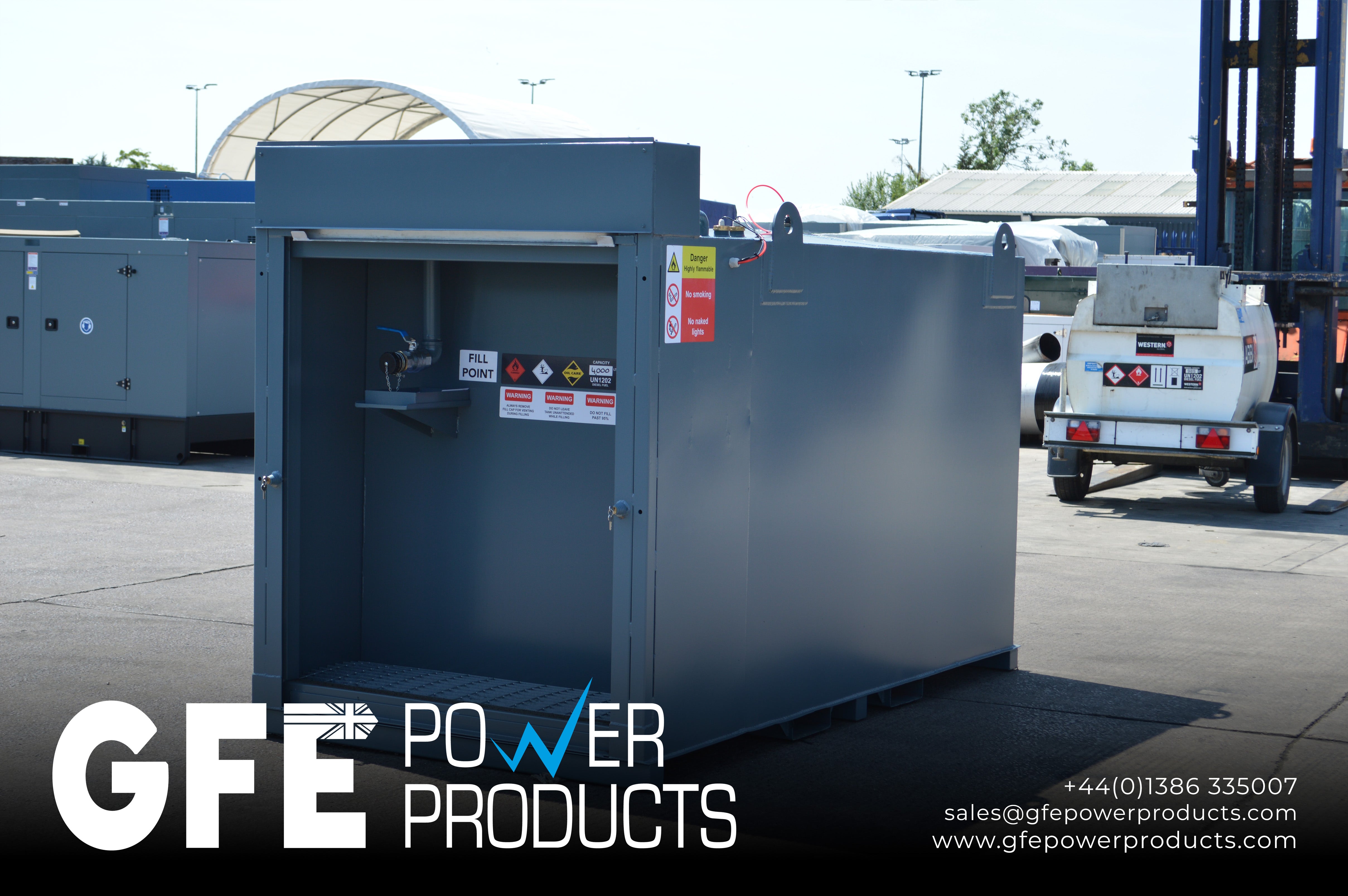
For any generator that stores diesel on site whether in a base tank, a bulk storage tank, or a containerised installation a structured fuel management programme is the most effective way to protect the asset and ensure readiness. The following steps form the basis of good practice.
1. Test Your Fuel Regularly
Fuel should be tested at least annually for stored standby applications, and more frequently for high-capacity bulk storage. A standard fuel test analyses water content, microbial contamination, sediment and particulate levels, and fuel stability. Results indicate whether the fuel is fit for use, requires treatment, or needs to be polished or replaced.
2. Keep Tanks as Full as Practical
A full tank leaves less air space for condensation to form. Where operational requirements mean tanks are frequently run low, consider the use of a nitrogen blanket or ensure the tank vent system is fitted with a desiccant breather to remove moisture from incoming air.
3. Use Fuel Additives Appropriately
Biocide additives kill and prevent microbial growth and are recommended as a preventive treatment, not just a response to an active infestation. Fuel stabilisers extend the storage life of diesel by slowing oxidation and gum formation. Both are widely available and represent a very low cost relative to the protection they provide.
4. Polish or Replace Degraded Fuel
Fuel polishing pumping stored diesel through a series of filtration and separation stages removes water, sediment, and microbial matter without disposing of the fuel. It is the most cost-effective remediation option for large volumes of degraded but recoverable diesel. Where contamination is severe, fuel replacement may be the only option.
5. Clean Tanks Periodically
Even with good fuel management, tanks accumulate sediment over time. A physical tank clean draining, washing, and inspecting the interior should be carried out periodically, and is essential after any significant contamination event. Tank cleaning also provides the opportunity to inspect for internal corrosion before it becomes a structural issue.
6. Match Fuel Specification to the Application
For long-term storage applications, consider specifying HVO rather than FAME-blended diesel. For cold-climate deployments, ensure the fuel's cold filter plugging point (CFPP) is appropriate for the expected temperature range. For export projects, verify that locally available fuel meets the engine manufacturer's minimum specification quality can vary significantly between markets.
What To Check When Taking Delivery Of A New Generator
If you are commissioning a new generator installation, fuel quality management should begin before the tank is first filled. Ensure the tank is clean and dry before delivery. Specify fuel from a reputable supplier with a known supply chain. Consider adding a biocide treatment to the first fill if the tank will sit with fuel in it for more than a month before the first load test. And establish a fuel management schedule as part of the overall maintenance plan from day one retrofitting good habits is harder than building them in at the outset.
Enquire with Us Today
Have a question about fuel management, generator specification, or finding the right set for your application? Our technical team is happy to help.
Phone: +44 (0)1386 335007
Email: sales@gfepowerproducts.com